Art in the Age of AI: The Claire Silver Manifesto
Claire Silver embodies the era of post-analog art. For her, AI isn’t a gimmick but a partner — a true companion in creation. Her work explores identity, pain, divinity, and humanity in the post-human age. Blending painting, collage, photography, algorithmic generation, and digital retouching, she creates pieces that feel both familiar and unsettling, poetic and provocative. Through her anonymous yet powerful voice, she asserts: “Taste is the new skill.” Today, Claire Silver is not just an artist; she is a bridge between worlds, a living manifesto for the art of tomorrow.
TOP NFT PICKS
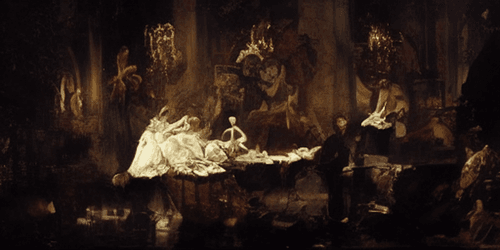
Claire Silver stands as one of the defining voices of post-analog art — an artist who treats artificial intelligence not as a novelty, but as a creative companion. Anonymous by choice yet unmistakably influential, she works at the border where human intuition meets machine imagination. Her art explores identity, pain, divinity, memory, and the future of the post-human self. By blending painting, collage, photography, algorithmic generation, and digital retouching, she creates works that feel at once familiar and unsettling, poetic and provocative.
Her guiding principle — “Taste is the new skill” — reframes the role of the artist in a world where technical execution can be delegated to machines. What matters now, she claims, is vision, intention, and sensibility. Nowhere is this clearer than in her two cornerstone collections on OpenSea: Genesis and AI Art Is Not Art.
GENESIS — The First Breath of a New Medium
“Genesis” represents Claire Silver’s foundational gesture — the moment she begins mapping the emotional, symbolic, and subconscious territories opened by AI. The collection gathers a series of works that embrace abstraction, ambiguity, and dream-logic.
These images appear like fragments of an inner mythology: distorted portraits, half-formed landscapes, spectral silhouettes. They are not illustrations but evocations — invitations to contemplate the space where human perception dissolves into machine imagination.
The title, Genesis, is deliberate. It signals a beginning, not only for Silver’s career on the blockchain but for a new form of visual storytelling. These pieces carry the sensation of emergent worlds, of something ancient and futuristic at once — as if the algorithm were excavating memories that never belonged to a single mind.
AI ART IS NOT ART — A Provocation, a Statement, a Turning Point
With “AI Art Is Not Art”, Silver shifts from introspection to provocation.
The collection’s title is both a criticism she has heard and a challenge she throws back at the art world. Here, she mixes analogue and digital languages more explicitly: hand-made textures, painted fragments, scanned materials, layered with algorithmic generation and fine digital manipulation.
Each work embodies her belief that AI is neither shortcut nor threat — but collaboration. The pieces vary wildly in form and mood: surreal portraits, symbolic compositions, glitch-poetics, visual metaphors of suffering and transcendence. But beneath the diversity lies a single conceptual spine: art does not disappear when tools evolve; it transforms.
This collection became one of Silver’s most recognizable bodies of work precisely because it confronts the central debate around AI creativity. Is art defined by manual skill? Or by intention, taste, perspective, and emotional resonance?
For Silver, the answer is clear: when the machine becomes capable of execution, the human must become capable of vision.
Between Worlds: Identity, Anonymity, and the Post-Human Artist
What distinguishes Claire Silver is not a signature style — her aesthetics shift constantly — but a signature philosophy. She treats AI as a mirror of the subconscious, a way to reveal inner states or “qualia” that are otherwise resistant to language.
Her anonymity amplifies this approach. By removing herself as a visible persona, she lets the work act as the interface between the human and the post-human. She becomes a bridge rather than a brand — a mediator between traditional artistic intention and computational imagination.
Her practice asks difficult, timely questions:
What remains uniquely human when machines become collaborators?
Where does identity reside in hybrid artworks?
What does authorship mean in a multi-intelligence creative process?
How will taste — personal, cultural, algorithmic — shape the future of aesthetics?
These questions are not merely theoretical. They are woven directly into the texture of her images, provoking viewers to sense rather than resolve them.
A Vision for the Art of Tomorrow
Through Genesis and AI Art Is Not Art, Claire Silver charts a path for a new artistic era — not defined by the disappearance of the human, but by its transformation.
She argues that no machine can replace the nuances of taste, emotion, trauma, memory, or intuition. But machines can extend them, amplify them, and challenge them. In her hands, AI becomes a second consciousness — not autonomous, but intertwined — enabling the emergence of visual worlds neither could produce alone.
Claire Silver is not merely an artist working with AI.
She is a translator of the post-analog condition.
A thinker of the hybrid self.
A witness to the new aesthetics shaped by co-creation.
Above all, she is a manifesto in motion — a living demonstration that the art of tomorrow is already here, and that its language is written by the meeting of human vision and machine imagination.
"Her approach has profoundly shaped my own creative practice, inspiring several of my pieces". Arto Kristo